Tracking the Trend: Where is the Money Going?
KESD's annual budget has climbed from $34.3 million in FY2021 to $53.2 million in FY2027 — a staggering 55% increase in just six years. The FY2027 budget required three community votes before passing by a razor-thin margin of just 25 votes. That should send an unmistakable message to district leadership: taxpayers are deeply concerned about the rising cost of our schools and deserve clear answers about where their money is going.
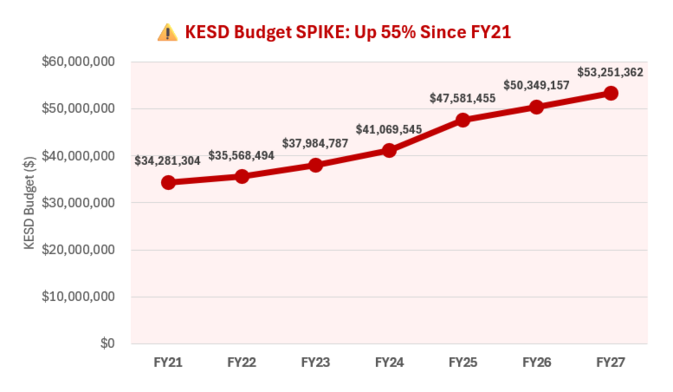
FY = Fiscal Year. FY2027 covers July 1, 2026, through June 30, 2027. Source: KESD Annual Reports and approved FY2027 budget.
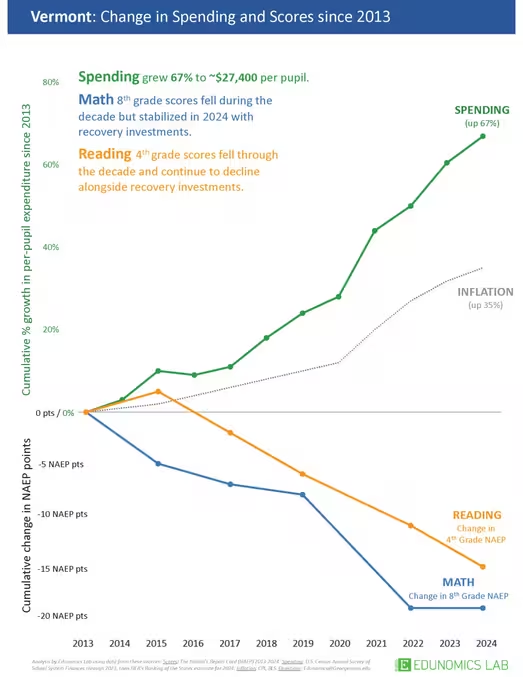
Vermont’s Change in Spending Alongside Reading & Math Outcomes:
Georgetown University's Edunomics Lab examined Vermont's education spending alongside student performance from 2013 to 2024. The findings raise a troubling question: Why are taxpayers spending so much more while students are performing worse?
During that period, Vermont's per-pupil spending increased 67%, while fourth-grade reading and eighth-grade math scores declined. The chart below tells the story: More money. Lower scores. Where's the accountability?
The Structural Disconnect: Fewer Administrators, Rising Costs
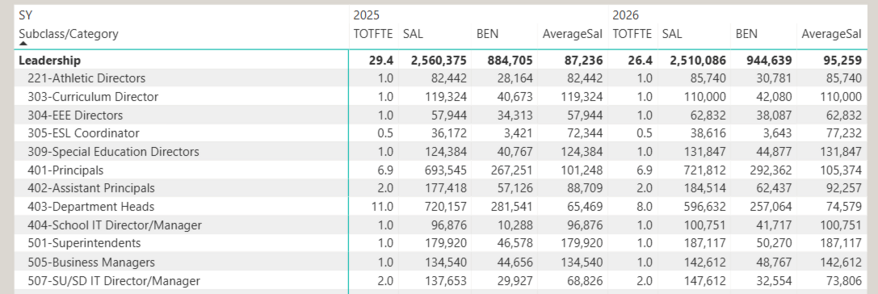
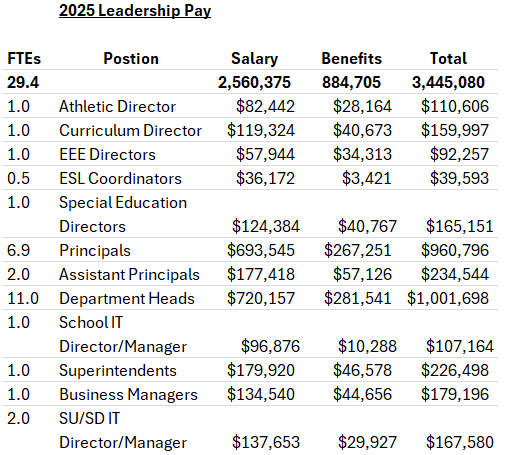
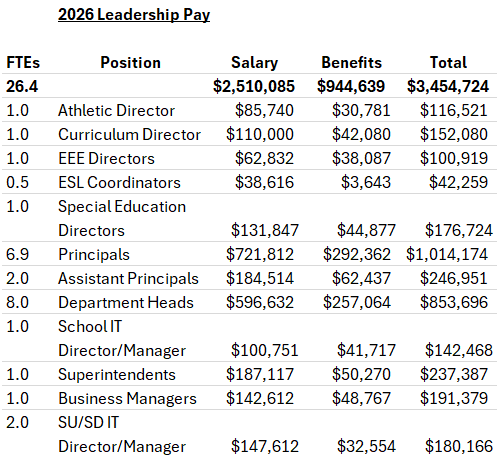
Public records from the Vermont Agency of Education reveal a troubling disconnect. Between 2025 and 2026, KESD reduced its leadership staffing from 29.4 to 26.4 full-time equivalent positions. Yet the combined cost of leadership salaries and benefits still increased.
Three fewer full-time equivalent positions. Higher average salaries and benefit costs. Despite a reduction in leadership staffing, total compensation costs still increased. Taxpayers deserve to know why fewer administrative positions haven't resulted in lower overall leadership expenses.
The table below comes directly from the Vermont Agency of Education.
Taxpayers are left holding on for dear life as school costs continue to climb. Even with fewer administrative positions, the total cost of leadership compensation keeps rising. At what point do taxpayers get some financial relief?
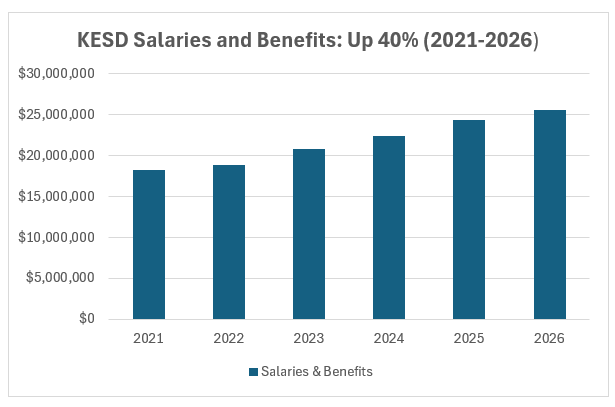
Source: Data for the graph obtained from Vermont Agency of Education Data Dashboard, accessed September 3, 2026. Salaries and benefits, school years 2021–2026.
Add It Up: The Real Cost of KESD Compensation
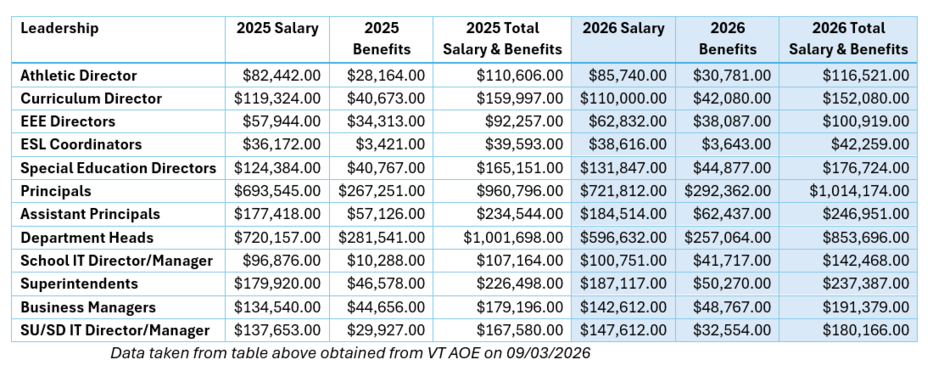
A salary figure alone doesn't tell taxpayers what an employee costs. Salaries and benefits must be considered together to understand the full financial picture.
The table below combines the salary and benefit amounts reported by the Vermont Agency of Education for KESD leadership positions in 2025 and 2026. These figures reveal the substantial cost of district administration — and why taxpayers deserve transparency about every dollar spent.
The salary is only part of the story. Taxpayers are paying for the benefits, too.
Note: Salary and benefit figures represent totals for each job category, not individual employees. See the Vermont Agency of Education table above for the full-time equivalent (FTE) staffing reported for each category.
The Reality: Record Spending, Declining Academic Performance
Official Vermont Agency of Education records reveal a troubling trend in the Kingdom East School District. As education costs continue to climb, too many students are falling short of basic academic expectations.
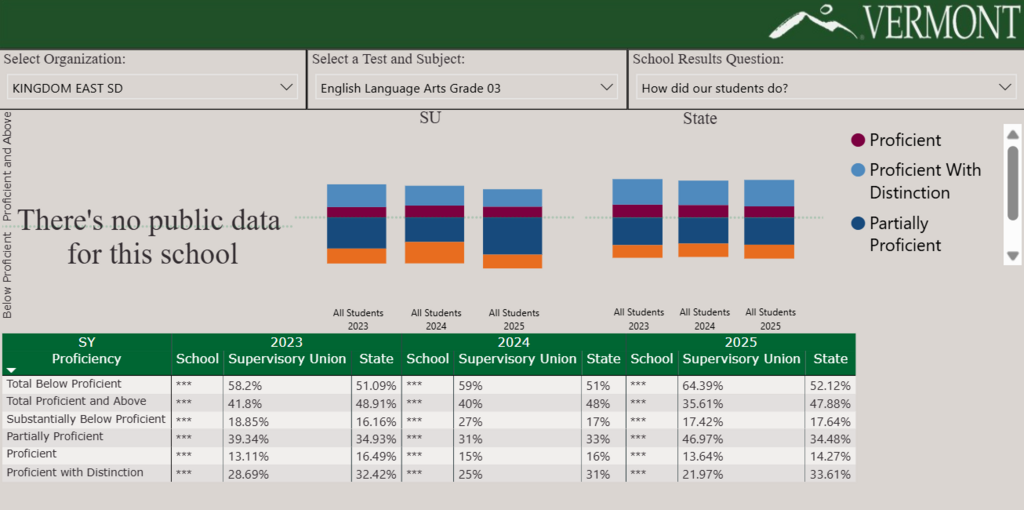
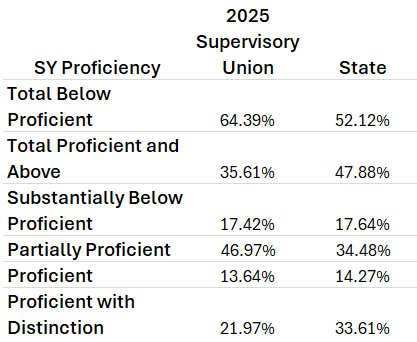
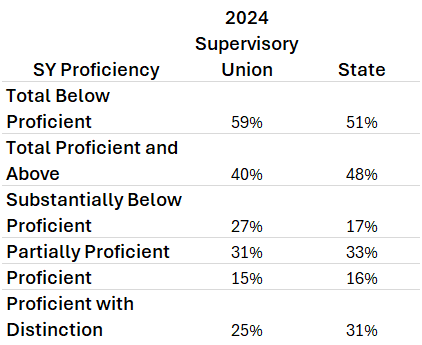
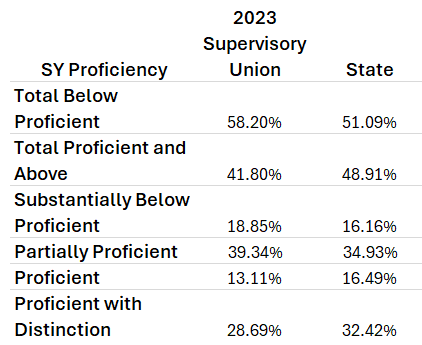
More Students Falling Behind: In 2023, 58.2% of KESD third graders scored below proficient in English Language Arts. By 2025, that figure had risen to a staggering 64.39%.
Trailing the State: In 2025, Vermont's statewide below-proficient rate was 52.12%. KESD's rate was more than 12 percentage points worse.
Fewer Students Meeting Standards: Just 35.61% of KESD third graders achieved proficiency or higher in 2025, down from 41.8% in 2023.
Taxpayers are being asked to fund increasingly expensive schools while far too many children struggle with fundamental reading skills.
More spending should mean better opportunities and better outcomes for students. Where is the accountability?
Breaking Point: Who Pays the Price?
According to Vermont's Joint Fiscal Office, roughly two-thirds of the state's education budget is funded through education property taxes. That puts an enormous burden on homeowners, working families, and seniors living on fixed incomes.
Since FY2021, the Kingdom East School District's annual budget has increased by 55% — nearly $19 million. Meanwhile, families are struggling with rising costs for groceries, heating oil, medical care, and other necessities. How much more can they afford?
For some of our neighbors, the consequences of financial hardship can be devastating. Falling behind on property taxes can ultimately put the very homes they've worked a lifetime to own at risk.
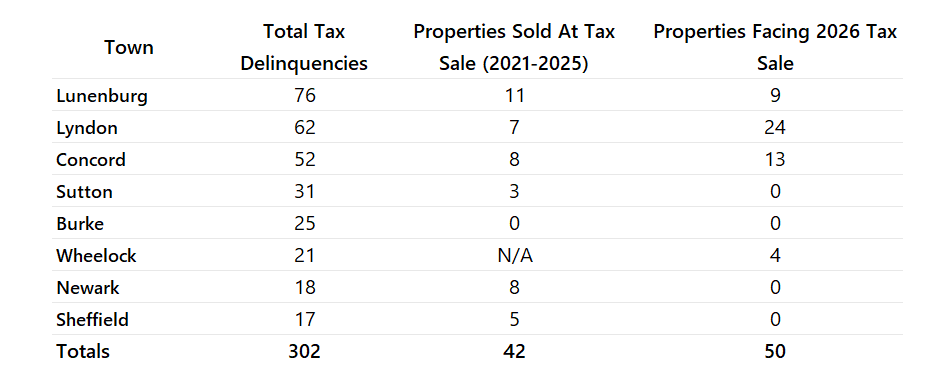
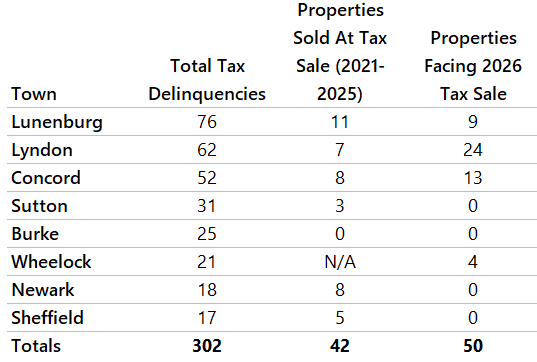
The warning signs are already here. Town records collected between May and June 2026 reveal 302 reported tax delinquencies, at least 42 properties sold at tax sale between 2021 and 2025, and 50 properties facing tax sale in 2026.
Source: Records obtained from individual towns between May 7 and June 1, 2026. Tax sale figures for Wheelock (2021–2025) were unavailable.
How much more can our neighbors be expected to pay before keeping their homes becomes unaffordable?
What's Driving Costs? The Benefits!
A salary is only part of what taxpayers pay. Beyond base salaries, KESD employee contracts include insurance benefits, paid leave, cash payments for unused time, and other provisions that add to the cost of operating our schools.
Some of these benefits may surprise taxpayers. The following provisions are found in employee agreements or established under state requirements:
• 100% Paid Single Coverage Dental Insurance: Covered by local taxpayers.
• Long-Term Disability Insurance: Covered by local taxpayers.
• Flexible Spending Accounts (FSA): Available for pre-tax savings.
• Paid Leave: 15 days of annual paid sick leave, accumulating to a maximum 110 days.
• Sick Leave Cash-Outs: Unused sick days exceeding the 110-day limit are paid out at $95 per day
• Personal Day Cash-Outs: Unused personal days are paid out at $95 per day, up to two days annually.
• Paid to Conduct Union Business: The KESD union president may take up to five paid school days annually to conduct union business.
Source: Kingdom East School District–Kingdom East Education Association, Teacher Unit Master Negotiated Agreement (2025–2028). [Read the full agreement (PDF)].
The Health Insurance Buyout
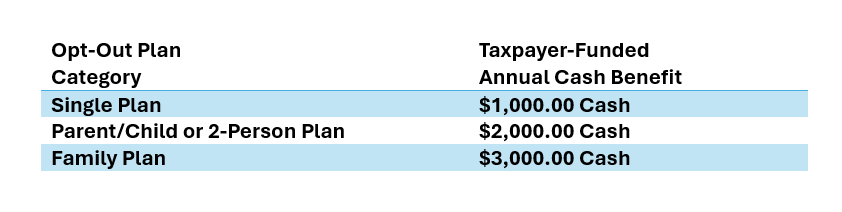
Under KESD's teacher agreement, employees who decline district health insurance because they have other qualifying coverage may receive annual cash payments of up to $3,000.
80% of Premium Costs Picked Up by Taxpayers
Under Vermont's statewide school employee health insurance agreement, taxpayers must pay 80% of the premiums for specified health plans covering teachers and licensed school administrators. The following table illustrates the monthly employer and employee costs:
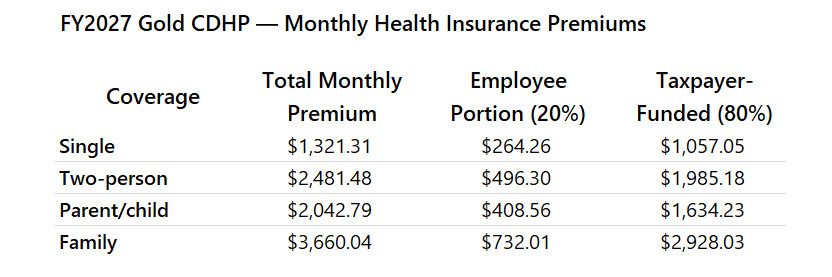
Sources: VEHI FY2027 Approved Health Insurance Premium Rates (Gold CDHP); Vermont Statewide School Employee Health Benefits Agreement,
Article VII, Section 7.1 (extended through December 31, 2027).
Health Reimbursement Arrangements (HRAs)
Vermont school employees can receive employer-funded Health Reimbursement Arrangements (HRAs) that cover eligible medical expenses, including deductibles, copayments, and coinsurance.
For taxpayers already struggling with rising property taxes and their own healthcare costs, these benefits raise a question of fairness and affordability.
When taxpayers are struggling to afford their own healthcare and property taxes, is it reasonable to require them to fund healthcare benefits that may be substantially more generous than their own?